If you own or manage a website, especially an e-commerce site, you’ve probably heard plenty of security terms thrown around. “WAF” is likely one of them.
It stands for Web Application Firewall, which admittedly doesn’t make it sound any less technical.
So, let’s forget the acronym for a minute.
Think of a security guard standing at the front door of your website.
Every time someone visits your site, clicks a page, logs in to an account, adds something to a cart, or tries to reach your checkout, information is sent back and forth between that visitor and your website.
Most of those visitors are exactly who you want them to be.
Some aren’t.
A WAF is the “guard” that helps tell the difference.
What Does a WAF Actually Do?
A Web Application Firewall inspects incoming web traffic before it reaches your website and helps identify requests that appear suspicious or malicious.
Imagine owning a physical store. You wouldn’t necessarily want every person walking through the door to have unrestricted access to your cash register, stockroom, office, and computer system.
Your website shouldn’t work that way either.
A WAF essentially stands at the entrance and asks:
Does this request look legitimate, or is anything about it suspicious?
When something looks dangerous, the WAF can block it before it gets where it’s trying to go, saving you valuable server resources, production time, and potential lost sales.
That can include attempts to exploit vulnerabilities in your website, malicious requests, suspicious bots, and other common web attacks.
Why Is That Important?
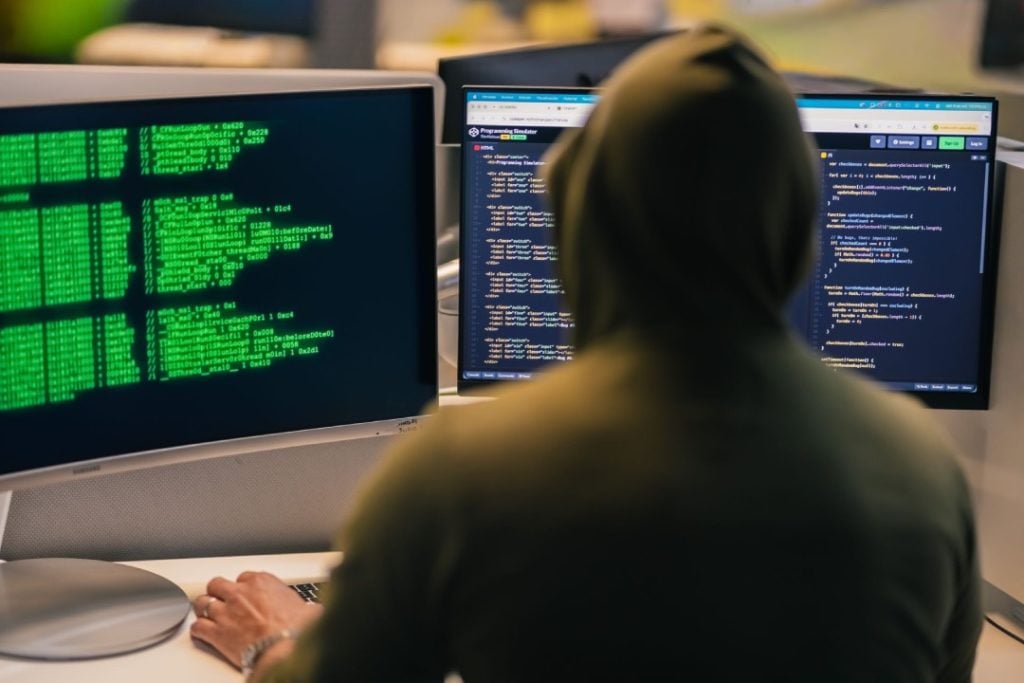
Because websites today are constantly being scanned, tested, and attacked by automated systems.
And here’s something I think is important for business owners to understand: you don’t have to be a huge company to be a target. In fact, smaller companies are often the target because they don’t have the same resources as large businesses, whether financially or legally; small- to medium-sized businesses are often targeted because the attack is more likely to yield funds for the malicious individual.
A lot of malicious traffic isn’t someone sitting behind a computer specifically choosing your company. Bots and automated tools continuously scan websites looking for weaknesses.
If they find one, they can try to take advantage of it.
For an e-commerce business, the consequences can be especially serious. Your website isn’t just a brochure. It’s your online storefront.
If customers can’t access your site, log in, add products to their cart, or complete checkout, you’re potentially losing revenue.
And if customer information or your website’s integrity is compromised, you’re dealing with an entirely different level of problem.
That’s why security shouldn’t begin after something happens.
A Firewall and a WAF Aren’t Exactly the Same Thing
This is another distinction that isn’t always obvious.
A traditional firewall protects the local network and server infrastructure.
A Web Application Firewall protects the web application itself and looks at the traffic interacting with it.
In simple terms, a regular firewall helps protect the building.
A WAF is paying attention to what’s happening at the front door.
For platforms like WordPress, WooCommerce, Magento, and even Shopify, that additional layer of protection matters because there are a lot of moving pieces: logins, plugins, extensions, forms, carts, checkout pages, APIs, and integrations.
Each creates interactions between your website and the outside world.
Don’t Assume Your Hosting Includes a WAF
This is something I think more website owners should know.
Just because you’re paying for hosting, even managed hosting, doesn’t necessarily mean a Web Application Firewall is included.
Hosting companies offer very different levels of security. Some include a WAF as part of their service. Others may offer one only on certain plans, require you to purchase it separately, rely on another provider, or leave some of that responsibility to you or your development team.
That’s why “we have managed hosting” doesn’t completely answer the security question.
It’s worth asking your hosting provider specifically:
- Do I have a Web Application Firewall protecting my website, and is your team actually managing that protection for me?
For an e-commerce business, the above is worth knowing the answers to.
This Is One of the Things I Appreciate About Questa Volta
I’m an Account Manager at Questa Volta, not an engineer.
That actually gives me a slightly different perspective on all of this.
I spend my time talking with our customers, checking in on their accounts, and working with our technical team. I get to see what happens behind the scenes without being the person configuring the security.
And one of the things I’ve come to appreciate is how much work goes into making sure our customers don’t have to think about these things every day.
Our managed hosting includes the security infrastructure and protection we believe meets our customers’ current website needs, including a Web Application Firewall, and is routinely monitored for improvements based on each individual client’s needs.
Our customers aren’t expected to become security experts just because they own a website.
That’s our job.
And there’s a certain peace of mind that comes with knowing there are people actively paying attention to the infrastructure behind your business.
Good Security Should Be Pretty Boring
This may be my favorite way to describe it.
Good website security isn’t supposed to be exciting.
You shouldn’t be getting frantic phone calls about your website being compromised. You shouldn’t be spending your evenings trying to figure out why suspicious traffic is hitting your site. And your developers shouldn’t constantly be pulled away from their actual work to investigate infrastructure problems.
Ideally, your website is simply up, protected, performing well, and doing what it’s supposed to do.
That’s what I see with our customers.
They know our team is there. They know they can reach us when they need us. And they know we’re paying attention to what’s happening on their website.
A WAF is only one piece of our protection, but it’s an important one.
So the next time someone tells you “your website has a WAF,” you don’t need to know all the technical details.
Just remember:
There’s a security guard at the front door of your website, checking who’s coming in before you let them near the cash register.
And yes, at Questa Volta, we’ve got one standing there who is constantly alert and learning new ways to protect you all the time